As we embark on next steps, we will be guided by the following commitments to our institutional infrastructure:
The College is committed to financial sustainability. Swarthmore has a proud history of careful stewardship of all its resources, not only financial ones, but human and operational infrastructural resources as well. At the same time that we use existing resources wisely, we also try to plan for an uncertain future. We identify possible scenarios, develop contingency plans, and seek a prudent course. We will continue to make financial decisions against an economic backdrop that is increasingly uncertain, which means we must exercise an even higher measure of scrutiny and flexibility in our financial forecasting and recognize that substantial new directions are not possible without increased philanthropy.
The College is committed to a supportive workplace. Swarthmore’s community is deeply enriched by the substantial contributions of a dedicated staff, known for its excellence, commitment, and indeed, its exuberance about the College and its mission. Every staff member at Swarthmore contributes in a meaningful way to ensure that the College provides an unparalleled positive experience for our undergraduates. The College has long valued its relationship with staff. Although we have made great strides in recent years to create an even more professional environment, there is more to be done. We know that an excellent staff remains excellent when it is able to take advantage of rich opportunities to continue learning and developing professionally. In the current climate of rapidly advancing technology and ever-developing competencies, we must provide greater opportunities to stimulate professional growth for staff. We are especially mindful, in these stressful times, of the need to create greater wellness programs and opportunities for staff to enable them to lead healthy, balanced lives both on and off campus.
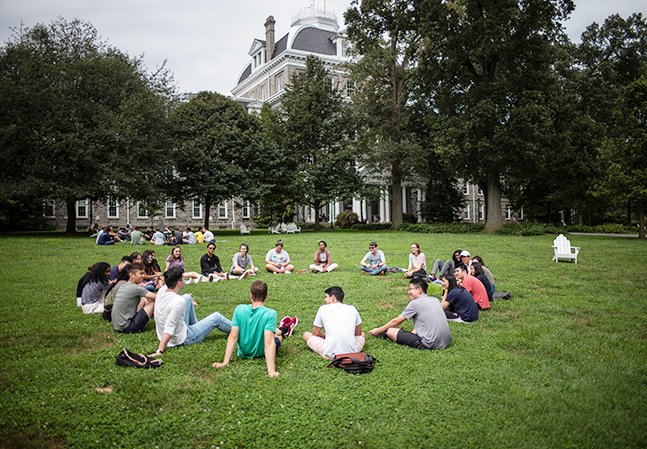
The College is committed to environmental sustainability. The College is committed to proper stewardship of our natural environment, which includes conservation of resources, reduction of waste, and careful maintenance of facilities. The College grounds encompass 425 acres, with 117 acres around our academic, administrative, and residence halls, 35 acres of athletics facilities, and the 190-acre Crum Woods, used by a number of academic departments for teaching and research and by students, faculty, staff, and townspeople for recreation. The grounds also include the 30-acre Martin Tract (a limited access mature forest) and 53 acres of land owned and managed as part of the faculty/staff housing program. The campus is also an arboretum: the Scott Arboretum of Swarthmore College was established in 1929 and is recognized internationally and accredited by The American Association of Museums. We are proud of our recent history of having little deferred maintenance, using innovative building practices that meet LEED standards, and creating a culture of sustainability as well as maintaining a cohesive, broad-based program that includes policy, curriculum, and operational components that protect the environment. Where financially possible, the College will promote sustainable living on campus that serves as a role model for students, faculty, and staff.
The College is committed to staying small while offering a challenging curriculum and a vibrant extracurricular program. Swarthmore’s size is essential to retaining the spirit of our community and the close, collaborative nature of our faculty/student relationships. Indeed, with a current enrollment of about 1,500 undergraduates, Swarthmore is the smallest of the highly selective liberal arts institutions, if one combines institutions in geographically close consortia, which allow these schools to share operational support, seamless access to an expansive curriculum, and student programming. As economic and global conditions change, however, many peer institutions are finding that there is a “new normal” for small. A range of considerations— programs that students and faculty expect, sustainable cost structures, and desired technology and facilities—are leading many of these institutions to increase their size. We are also aware that our historical pattern of continued, slow growth might enable us to offer a broader curriculum and academic program and a richer set of student experiences. It may also increase the dimensions of our student body. There is no desire for a dramatic or sudden increase in our student population, and we will carefully scrutinize potential growth in the student body to ensure that the considerable benefits we derive from being small are not compromised.
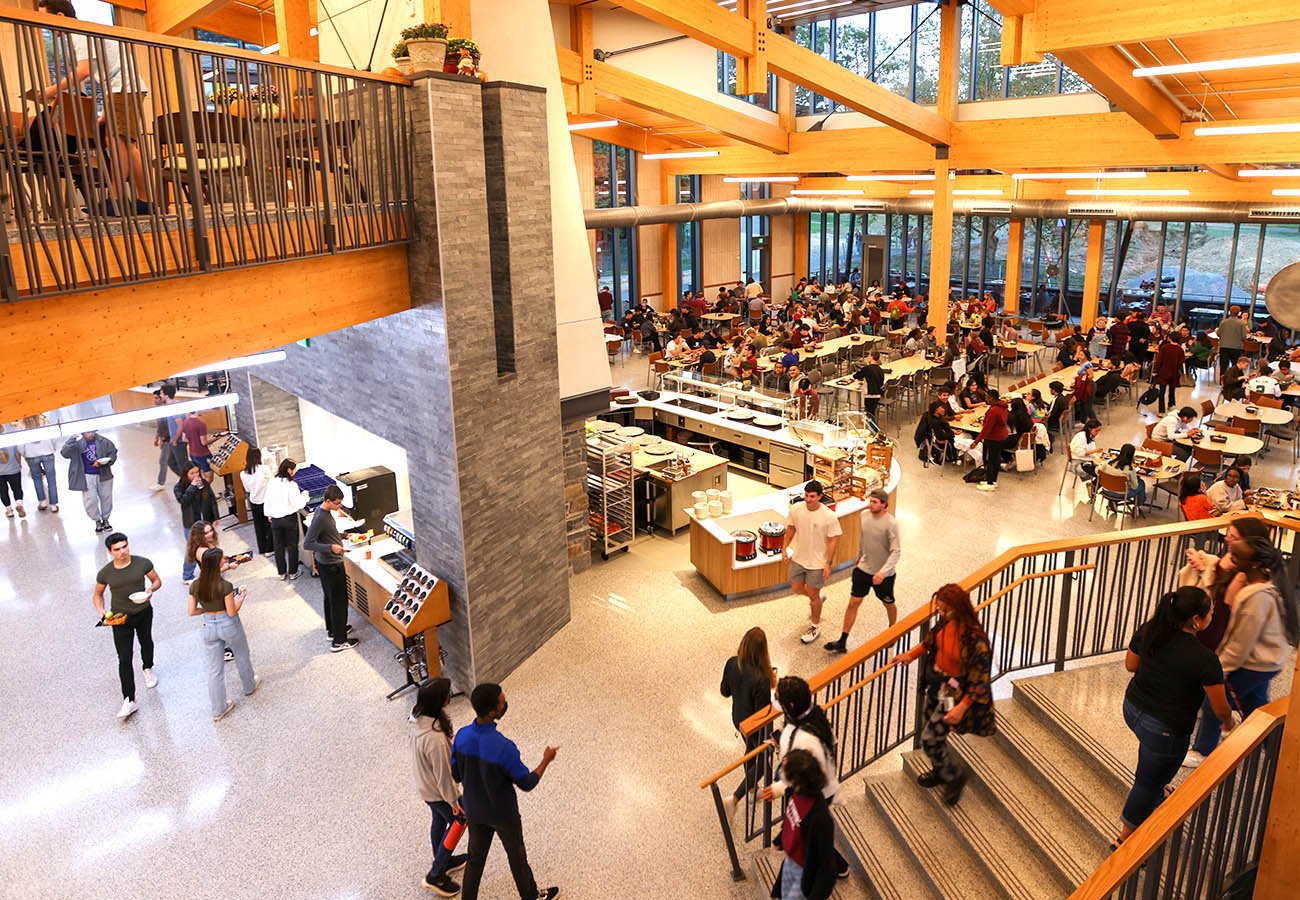
The College is committed to creating a campus where buildings and infrastructure support the strength of the academic program and increase opportunities to enhance community. This plan calls for improvements to our building infrastructure in support of our academic mission, most notably the development of new facilities to extend the excellence of our science programs and a new media commons. It calls for new and improved spaces to further develop community including the addition of a dining facility for students and significant improvements to the repurposing of Sharples and Clothier to support student performing and studio arts and other needs. The plan also notes that the athletics facilities need to be upgraded and a new fitness center will greatly enhance our wellness initiatives. These spaces, along with the potential to develop an inn, restaurant, and retail spaces on the edge of campus, compel us to move forward with a campus facilities master plan to take a strategic approach to the overall campus “footprint.” A master plan will focus on sustainability issues as well as ensure that the fundamental nature of our special “place” is retained and enhanced.
The College is committed to a culture of assessment. Swarthmore has placed a high priority on assessment for many years. Even before recent public and government demands for accountability and the new assessment standards of accreditation organizations, the College developed a foundation for assessment of both student learning and overall institutional effectiveness. Throughout the strategic planning process, the importance of ongoing assessment for new initiatives as well as ongoing programs has been underscored. As the College uses its resources in the most effective ways, we must instill a culture of continuous evaluation relative to our mission and goals.
I’m impressed with the academic focus of the strategic draft, but I am concerned about the lack of any plan for a religious space. I cannot attend the meeting tonight, but I do feel strongly about this. I know that many other schools have a sanctuary, or a designated space where students can go to have a moment of silence. I don’t think there is any place like on Swarthmore, neither is there a plan for one. I do not consider Bond Hall, which is often booked for large events, as a private, quiet place of calm. Please consider building a space just for this purpose. I think it is very important, especially since Swarthmore values community and going against the grain of what the popular society deems as the norm, to provide the students with a place to find peace and a place to slow down from the speed of life. Thank you.
As a psychology student who frequents Papazian Hall for office hours, research, and class, I understand why we must examine options for improving our teaching and learning spaces. Papazian could, for example, be larger and better lit, ventilated, and technologically equipped for accommodating classes and new research technologies for professors and students.
Even as I desire these improvements, however, I maintain an equal desire to preserve the beautiful outdoor and undeveloped spaces of the campus. Addressing this possible incompatibility of desires, this draft importantly and commendably considers both developing new spaces and substantially renovating existing ones. By renovating the buildings we already have, the College can protect and preserve open outdoor spaces (e.g., Parrish Beach, Mertz Field) and the Crum Woods, demonstrating a forefront commitment to environmental sustainability and the preservation of our intimate learning space.
Unfortunately, however, this draft only imagines a future with new spaces, separate from the ones we presently have without addressing several uncertainties: Where will we build these new facilities for science programs, a media commons, and a dining hall? Might renovating and expanding the facilities we already have be a better option? Have we considered renovating within, onto, upward, or even downward instead of demolishing and/or building anew? For this plan to be truly strategic, it must answer these questions and demonstrate the College’s support for sustainability that does not rely on endless physical expansion.
Just as the physical human body cannot be indefinitely expanded without creating unhealthy demands on the self and its environment, we must keep in mind that the same holds true for all of the physical spaces in which we reside. Before we expand, we should respect both the buildings and the free space we already have and focus on enriching the environments, interactions, and conversations we’ve already invested in. We should assess and improve the spaces we already have – including dormitories, academic halls, athletic facilities, and meeting rooms – in order to more fully meet the diverse physical, social, and intellectual needs of all students.
And then, if we find that our internal spaces are maximally efficient, that we still must build externally, we should remember that while Swarthmore’s being “small” is a matter of relativity, Swarthmore’s being “intimate” is not. We can continue to physically grow new buildings (and our student body) and remain “small,” but eventually we will lose the original, intentional intimacy that is, or will have been Swarthmore.